If the idea that SEO is dead crosses your mind or turns up in print, dismiss it. The fact is that nothing is really going to change in the way that we pursue the almighty ranking, with the possible exception of the resurgence of the long tail keyword, which was working its way back into our hearts anyway. Everything that worked before Hummingbird’s release will still work moving forward. This includes:
- Original and engaging content is still king
- Legitimate back links that are earned using proper SEO are still important
- The same signals that worked before will continue to garner results
- Keywords will still need to be carefully placed and used in moderation
The only thing that is really going to change in a meaningful enough way to be noticeable is the way Google’s new algorithm interprets the way we search.
Hummingbird Breaks Old Search Habits
Currently, we type our question into the search engine and the algorithm chooses words from it, often sending us on a wild goose chase by bringing up links that have those specific words in them rather than finding links that relate to the context of the overall query.
In essence, Google has trained an entire generation of search engine users to pose questions in short keyword phrases that had little to do with what we wanted. Instead, we tried to guess where Google would take us and hope for the best. They taught us trial and error searching.
Keep in mind, search engines are the ONLY web properties with a goal to have their users spend as little time as possible on their website.
A Glean of Hummingbird Intelligence
With all of the intelligent changes Panda and Penguin brought to the table, it was only a matter of time before one of Google’s big brained developers found a way to “smarten” search engines up enough to take a question and look at the context rather than seeing the words within the query as separate entities. What does this mean for us? With any luck, it means that the Hummingbird is smarter than your average Panda.
So What is Hummingbird?
The Hummingbird is an entirely new algorithm. It approaches search engine queries in a brand new and intelligent way utilizing new technology combined with older features of the existing algorithms. It is named for the speed and accuracy of the tiny bird.
The Resurgence of Long Tailed Keywords
The Hummingbird is what Google is calling the latest (greatest?) algorithm that they slipped in under our radar in August. If the rumors are true, the Hummingbird will take a search engine query using long-tailed keywords and try to decipher the context of the question rather than chase the specific keywords within the question. The goal is to provide results that actually answer the question
The Knowledge Graph
When you think about it, an algorithm that looks for context within a question was inevitable.
Google has been up and running for 15 years (as of September), and in that time it has been collecting what could very well be the largest database of knowledge ever recorded.
In theory, the Knowledge Base has collected data for only a short while; however, most people believe differently. To this very moment, knowledge is being gathered, categorized, cross-referenced thousands upon thousands of ways, and stored. This vast well of knowledge is available to the Hummingbird.
With such a Knowledge Graph, was it not inevitable that Google would eventually find a way to utilize this information with an algorithm that deciphers the context of all the words in a query rather than homing in on a few key words therein? This is exactly what Hummingbird is designed to do.
Was Hummingbird Really A Surprise?
This new algorithm may have surprised the majority, but many people saw it coming. These are the people who use Google’s Conversational Search. The reason so many were caught off guard by Hummingbird is that very few paid that much attention when Conversational Search was rolled out nearly two years ago.
For those who do not know about Conversational Search, which is most of us, here is what you missed, which may have been the biggest hint to date that Google was close to cracking
semantic search.
Conversational Search
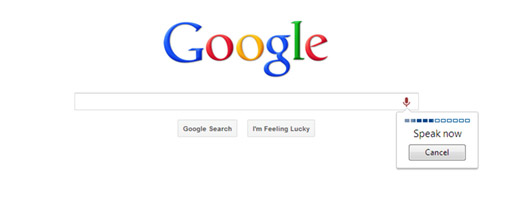
Users of Google Chrome may have noticed a small microphone icon in the right hand corner of Google’s search box (now on Google search as well). If the user clicks on that microphone (and has configured their computer for it) they may ask aloud the question they would have typed into the search box. The question is then displayed on the search screen, along with the results.
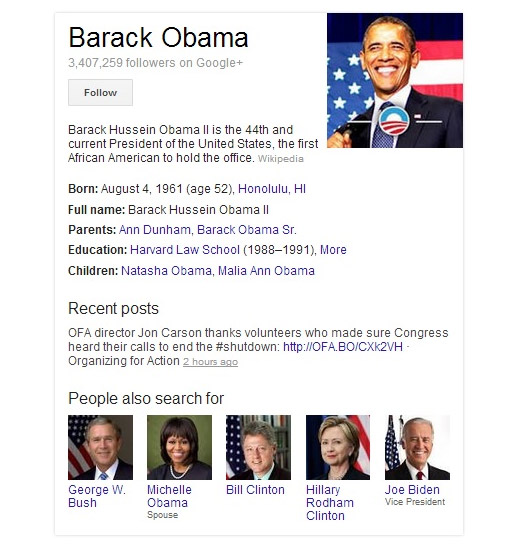
If the answer to the query is in Google’s Knowledge Graph, an Information Card is displayed with the pertinent facts listed along with a list of sites you may visit with more information and hopefully, the answer to your question. What users of “Google Speak” have come to realize is that the more conversational the query, the more information is provided. Did I mention the fact that Google speaks the answer back to you? Pretty cool, huh?
Why did Google Create Hummingbird?
Here are three reasons why Google had to create Hummingbird, and why it now has to perfect it:
- The ball is already rolling.
- Google promised answers by creating its very first search engine. The problem is, people are asking questions, not typing in keywords.
- More and more people are using their mobile devices to search. Google knows how important it is to understand a question, especially when you are driving. Comprehension is not new. It is just refined.
Technology Marches On
Google promised to answer our queries when it created the first algorithm that could answer them in the form of leading us to the answers. It takes this promise very seriously. In all, it has addressed the issue rather admirably. Of course, in providing the websites that hold the answers, it created its own worst problem in how to rank them.
The other problem is in the questions. We have always asked questions and up until now, Google has not answered any of them. It merely shows us where we might get the answers based on some of the words we use and making a guess. Now, Google wants to answer the questions by comprehending them and giving us the right answer the first time out.
Now for the Bad News
There is an aspect of Hummingbird about which no one is really talking. As searchers, we expect Google’s search engine to supply a results page with links to the best websites to answer our questions according to their rank. As websites, we expect to compete for those ranks by using SEO and providing interesting content with what we hope are interesting and thorough answers. What we do not expect is the answer to the questions appearing to the searcher before we get a chance to impress them with our hard work.
That Darn Traffic Stealing Information Card – Hummingbird is supposed to answer the search question. It does this by giving us an answer in the form of an “Information Card” taken from its Knowledge Graph and displaying it right at the top of the results page either above or to the right (sometimes both). While this is new and exciting, it is also a clear message by Google that it does not owe us anything. This uses our intellectual property without the responsibility… Hmmm, food for thought. It also begs the question of how our CRO and CTR will be affected when this is widely spread.
Let’s say you want to know if our president has brothers or sisters. There are plenty of websites that want you to visit them for that information. They work hard, play by the rules, and often, pay an arm and a leg to SEO firms. However, if you type in the question “Does Barrack Obama have brothers and sisters” (Hummingbird in action), here is what you will find at the top and side of the results page. (In Google Chrome):
There are many wonderful websites, CNN included, that want to give us that information and while they are at it, show us what wonderful surprises they have to offer. Unfortunately, Google has already answered my question in the Information Graph. Why should I bother to click on those links when I have the answer right here in front of me? Many of us offer professional information for free and in return hope the visitors will take actions on various CTA’s presented on our website. Is that the end of it? YES and NO, keep reading…
Hummingbird is a People Pleaser
If anyone has been paying attention, nearly every article on the Internet about Hummingbird says nothing about Google trying to please websites. Google is trying to get it right for people who type in questions looking for specific answers. If Google has the answer, why would anyone look any further?
This seems almost like a slap in the face to websites that spend good money – and lots of it – on genuine web marketing trying to get traffic. If we have to compete with other websites for traffic, that is fine. Bring on your best stuff because I am bringing mine. However, if we have to compete with a giant like Google, what chance do we stand, and why should we even bother to try?
Google Never Made Promises to Websites
The truth of the matter is that Google has never in its history promised websites anything more than a fair chance at a good rank using proper SEO. Google, the search engine, has never told anyone that it would never step into the information ring. Everything that Google has done has been for the searcher, not the website with the answers.
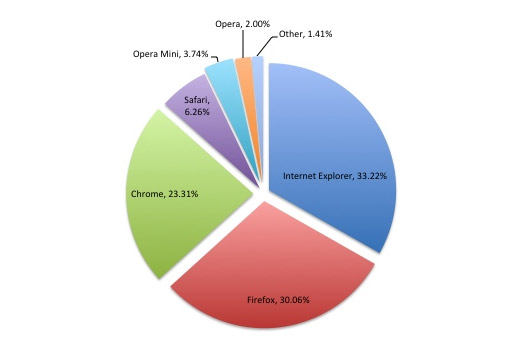
SEO is not affected by Hummingbird. You can still improve your ranking in the search engines by always striving to improve your SEO and provide original content (can’t stress that enough). Now, however, you also will have to compete with Google’s Information Cards that may already have the answer to the search in them. At the moment, this just applies to Google Chrome. How long will it be before other browsers find a way to follow suit?
Searched by browser:
How Can We Take Advantage of Hummingbird?
There has been a great deal of worry since the release of Hummingbird. If keywords matter less, long tailed keywords matter more, the ability to answer search engine queries through content matters most, and links are still extremely effective, what can businesses on a tight SEO budget do to increase their exposure? When in doubt, content is always the answer.
Hummingbird is an Invitation to Opportunity – What matters most is giving search engines more opportunities to find you. This means broadening your horizons by expanding the number of entrance pages that answer the questions being posed in your niche. More entrance pages with original content will accomplish several goals that can help with Hummingbird on the prowl:
- More pages that are original offer more opportunities to answer search engine queries
- A wider topic coverage area for your expertise
- The opportunity to introduce more long tail keywords
- Surfing the news websites for your niche and writing creative content from current stories
- Videos are still hot and alluring for those choosing links with answers to their questions
- Infographics draw the curious and are a great way to answer search engine queries in a creative and attractive manner
The Hummingbird Algorithm Opens Doors – In essence, nothing changes unless you have not been doing the things that you should be doing to be noticed. Creativity is what is needed if your business wants to compete in an incredibly competitive keyword market. Original content needs to be produced as often as possible.
If your business is to grow, the website and its corresponding blog needs to grow. The same thing that worked before, should still work with Hummingbird, especially if the content contains the answers to current topics from which questions may arise. All of these things still work:
- Surfing the news websites for your niche and writing creative content from current stories
- Videos are still hot and alluring for those choosing links with answers to their questions
- Infographics draw the curious and are a great way to answer search engine queries in a creative and attractive manner
Hummingbird and the Opportunity for More Exposure – When you really think about it, the release of Hummingbird creates the perfect scenario for smaller websites to gain more exposure. The incentive to create more entrance pages and be as creative and daring as larger sites should bring about a new prosperity.
Since branded keyword traffic data has been eliminated through Secure Search and Hummingbird now “gets” search engine queries, the ability to broaden website, blog content, and entrance pages in order to answer more questions is now a vital part of SEO strategy. The Hummingbird’s presence should just be an afterthought.
Hummingbird Do’s and Don’ts
One of the mistakes that some webmasters have made already is to hit the panic button and attack their existing content. There is really no need to go through your entire site making changes to content or anchor text to reflect a “How To…” overhaul in order to attract Hummingbird’s attention. The only thing that this can lead to is disaster.
If you have good, original content, revamping it may only make matters worse. You open the door to mistakes and may only ruin perfectly good content. The best thing to do is balance your content moving forward, making sure to be creative while adding some “How To” articles and blog posts liberally. You can tweak your website content to a small degree; just don’t be too obvious about it.
Claim authorship if you have not done so already. If you need to ask what authorship is, you are already behind in the game and need to start doing a little bit of catch up. Here is the deal… Google loves Google. If your website and corresponding blog is not already tied to your Google+ account, it needs to be.
Tying your efforts to Google+ allows your content efforts to be seen in the work section of your plus account by everyone in your circles, which should be half of the planet’s population. Check out this link for details on how you can take control of your
Google authorship.
Do not do anything that would appear to be an overt move to take advantage of any new Google rollout. Think about this for a moment: Google rolls out a new algorithm, the largest single change since 2001, and adds nothing to prevent smart and sly webmasters from taking advantage of it. That is very doubtful.
Do not do anything foolish such as suddenly hiring a link building service that uses less than desired tactics to load you up with
how to links or who knows what. Google will surely have a watchdog program for that. Keep it natural and have your company message associated with good quality content. When my clients ask about the core of their marketing plan, I always end up explaining content marketing. This is what everyone should focus on. Simply ask yourself what if
Google didn’t exist?
It is always a good idea to take advantage of any and all of the numerous Google services that are offered, mostly free of charge, that will help you to improve your website and blog. Video links on Google owned YouTube.com that teach or answer important questions are a perfect example of taking advantage of Google’s generosity and putting your business website squarely on Google’s Hummingbird map. Interviews with experts in your niche also are a wonderful idea since they are already composed in the question and answer format. Here are some other things that can help:
- Comprehensive FAQ page
- Q&A blog category
- How to posts (in moderation)
- Interviews
- Researches
- Industry debates
- Ask the expert (Are you an expert? Do something with it. Google will love you more.)
- Where can I [complete the sentence]
- Why [complete the sentence]
- What [complete the sentence]
A Brand New Way to Look At Keyword Optimization
If we break down Google’s 15th anniversary present to the world, we find that it is really just a new way for an algorithm to read search engine queries. Rather than looking at a few of the words within the query, Google’s Hummingbird looks at thecombinations of words and tries to ascertain the true meaning of the search. It then provides a result based on what it believes is the overall question. Does this not, in itself, spell the end of keyword optimization?
Not the End, Just a Change – The answer is no. The keywords within a query are still important. It does strengthen the role of long tailed keywords. However, once we couple the release of Hummingbird with Secure Search, which encrypts the search data of keywords, effectively hiding that information from marketers, we again have to draw the conclusion that Google is trying to reduce the importance of keyword optimization and force webmasters to appease the searcher.
In other words, it is no longer enough to draw any traffic to a website. We have to be more specific and target specific traffic by answering specific questions within the content. This cannot be done with just broad stroke keywords.
Good SEO becomes Good Marketing
One of the most obvious goals of Hummingbird is to turn SEO into marketing. It turns the website’s focus on a broader audience, forcing us to appeal to a wider market of readers. Content has just taken another large step, becoming even more important than the Panda tried to make it.
Could this have been Google’s end game all along, or are we in for an even bigger surprise, possibly included within the updates to Hummingbird that are sure to roll out in the near future? Only time will tell; but with each new release, Google becomes more transparent in its quest to appeal to and appease the public at large and change the way we look at Search Engine Optimization.
Hummingbird Heralds the Evolution of SEO
SEO is not dead, nor is it going away. What SEO is doing is evolving. Like the conductor of a great orchestra, Google is leading us along a road that will undoubtedly lead to its masterpiece. A search engine that understands queries and answers the call of the public’s cry for better search results and providing one search service would be a heck of a thing.
It may even turn out that e-commerce marketers needed to jump through all of the hoops that represent a changing SEO in order to get to the endgame in one piece. Again, we may not know what Google ultimately has in mind until we actually get to the end of the journey. All we know is what is put in front of us along the way.
A Look at Hummingbird and Long Tail Keywords
Long tail keywords are an effective way to search for specific information, especially now that the Hummingbird is loose. As a general rule, the long tail keyword is the complete opposite of the “head” terms, like shoes. A search for shoes is more common, but a search for “shiny red women’s shoes,” which is a long tail keyword based upon the head term, are more effective, making them more valuable.
Does Hummingbird Know What it is Doing?
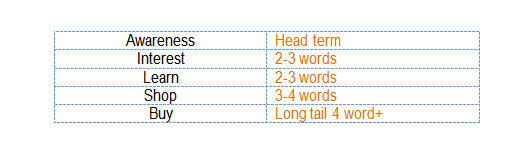
It starts to become obvious that Google knows what it is doing when it comes to the long tail keyword. Making them more important than individual keywords in regard to SEO is the best thing that could come out of Hummingbird. After all is said and done, long tail keywords have a higher conversion rate than standard keywords. In fact, on average, they convert 2.5 times more than one or two word keywords, making them far more lucrative. Look at it from a sales funnel and information point of view:
Hummingbird – Information and the Sales Funnel
The potential customer who uses long tail keywords is obviously more informed and therefore much further along in the sales funnel than those who do not use them. If you sell chocolate bars, and someone is looking for a Bavarian chocolate bar with coconut sprinkles, you stand a better chance of selling to this searcher than the one looking only for chocolate (provided you sell Bavarian chocolate bars with coconut sprinkles). Hummingbird’s move to strengthen the role of long tail keywords is extremely helpful in this way.
Hummingbird and Useful Content
The Panda asked us to provide unique content. What makes content unique? A big part of it is originality. Original content that offers a creative and interesting read for traffic and engages the reader to the point that they want to share it was the goal. Now Hummingbird want us to change that thinking just a little bit by broadening our aim to include content that is useful. (The more useful, the better.) The five things that we should take out of the release of Hummingbird are as follows:
- Content
- Long tail keywords
- Useful information
- Increased Entrance Portals
- Continued SEO
Content… Hummingbird Style
How to… These are the two words that will come to dominate webpages everywhere as webmasters will now seek to answer the questions that could be posed by potential traffic and customers seeking answers. It is a brave new game for content writers everywhere as they strive to provide the kind of how-to articles and blog posts that will best serve the search hungry public at large. Originality, engagement, informative content is still king.
Hummingbird Welcomes Long Tail Keywords Back
The re-emergence of the long tail keyword should be a welcome sight for webmasters. The average person never abandoned long tail keywords and now that websites are going to optimize for those, everyone will benefit. Long Tail Keyword Generators will become more popular than ever. Website owners will benefit from the free long-tail keyword generation tools that can be found on the Internet, like WordStream’s Long Tail Keyword Mining software.
The Useful Hummingbird
Useful information is the name of the game. What webmasters must decide is what is useful and what is not. For this reason, websites that answer as many questions over a wide array of topics will do well. What this means is more content. In order to answer as many questions as possible and provide more information, webmasters will call upon writers to produce more content than ever before in the hopes of making their websites as invaluable as ever.
More Places for the Hummingbird to Land
The more entrance portals a website has, the better off it will be. This means, again, more pages, more content, and more links that lead to these pages. Whether it is better to meet a few needs per article or blog post and provide numerous pages, or whether it is better to fill more needs over longer word counts with fewer pages, remains to be seen. Either way, it boils down to content.
Optimizing for the Hummingbird
Google stated that the release of its Hummingbird could potentially go unnoticed. It also stated that SEO would remain unaffected. For the most part, this is true. Everything we were doing to optimize our websites should continue to be our focus with the exception of long tail keyword optimization.
It is a brave new world in internet marketing and Google is leading the charge slowly but surely toward a better way to search for what we need. If you have a website, now is the time to adapt and prepare your websites and blogs for whatever may be coming next. It is anyone’s guess what the future holds. It may well be that we will have a better understanding of where Google is leading us upon the release of Hummingbird’s rolling upgrades. Until then, content and long tail keywords are the order of the day.
About the Author: Asher Elran is a practical software engineer and a marketing specialist, CEO at
Dynamic Search, and founder of Web Ethics.


 because they may link to that via various anchor texts like